
Bioresonance therapy uses electrodes and a device that claims to read and adjust the body’s electromagnetic signals. Does it work? A few small studies report benefits for smoking cessation, knee osteoarthritis and mild depression. But the theory behind it is unproven, other controlled trials found no effect, and major cancer centers do not recommend it. The honest answer is “possibly helpful for some people, not proven.” Treat it as a complementary tool, never a replacement for diagnosis, medication or medical care. Below you will see what the studies actually found, where they fall short, and how a functional medicine practice can use bioresonance screening responsibly.
What Is Bioresonance Therapy and Why Are People Curious About It?
Bioresonance therapy is a complementary method in which electrodes placed on the hands, feet or head connect to a device that supposedly detects and modifies electromagnetic oscillations from the body. The idea is that healthy and unhealthy tissue give off different signals, and that “correcting” them helps the body regulate itself.
The method grew out of electroacupuncture research in Germany in the 1970s, when physician Franz Morell and engineer Erich Rasche developed the first systems. Today bioresonance therapy shows up in clinics worldwide, with claims that range from allergies to chronic pain.
So why the concern? Because the claims often run far ahead of the proof. Many people feel stuck, with symptoms that routine labs cannot explain, and a painless, noninvasive option sounds appealing. Skeptics point out that the signals the theory depends on have never been directly measured. Both things can be true at once, which is the best reason to read the research instead of the brochure.
One clarification: you will also hear about bioresonance testing, sometimes called bioenergetic screening. Testing records how your skin’s electrical response changes during a session, while therapy claims to deliver signals back to the body. Our bioresonance screening in Midtown Manhattan is a screening tool, not a diagnosis.
“Explanatory concepts are not needed to test the reproducible effect of an intervention.” Pihtili et al., 2014
That is a fair point. Notice the demand hidden inside it, though: the effect has to be reproducible. For bioresonance therapy, that is exactly where the field still has homework.
Does Bioresonance Therapy Work for Quitting Smoking?
One double-blind, placebo-controlled trial suggests it may help. In a pilot study of 190 smokers in Istanbul, a single session led to a one-year quit rate of 28.6%, compared with 16.1% in the sham group. At one week the gap was wider, 77.2% versus 54.8% (Pihtili et al., 2014).
Why it matters: the control group sat through a realistic fake session, so expectation alone does not explain the whole difference. Why to stay cautious: results came from phone interviews, participants were assigned by alternating rather than true randomization, and one author had served as a consultant to the device maker. The researchers themselves called for larger trials.
Can Bioresonance Therapy Help With Joint Pain and Arthritis?
Early evidence points that way, but it is old and narrow. A Russian trial of 75 people with knee osteoarthritis compared standard care alone with standard care plus bioresonance. About 94% responded in the bioresonance group versus 57.5% with standard care alone, and the add-on group kept mild pain at rest for a year while pain in the other group worsened by month six (Maiko and Gogoleva, 2000).
The catch: there was no sham device, it was one center, it was published in 2000, and pain is highly sensitive to attention and expectation. Think of it as a hypothesis worth testing, not a conclusion.
Is Bioresonance Therapy Effective for Depression?
A small 2022 study found a bigger drop in depression scores with bioresonance than with antidepressants, but the comparison is shaky. Across 80 adults over five weeks, depression scores on the Hamilton scale improved by 3.1 points with bioresonance and 2.2 points with SSRI medication (Muresan et al., 2022).
Here is the problem. The groups started in different places, with average baseline scores of 16.9 versus 22.8, and the study was retrospective rather than randomized. The authors called the results promising and asked for larger studies. Please do not stop or change an antidepressant because of a study like this. Any medication change belongs with your prescriber.
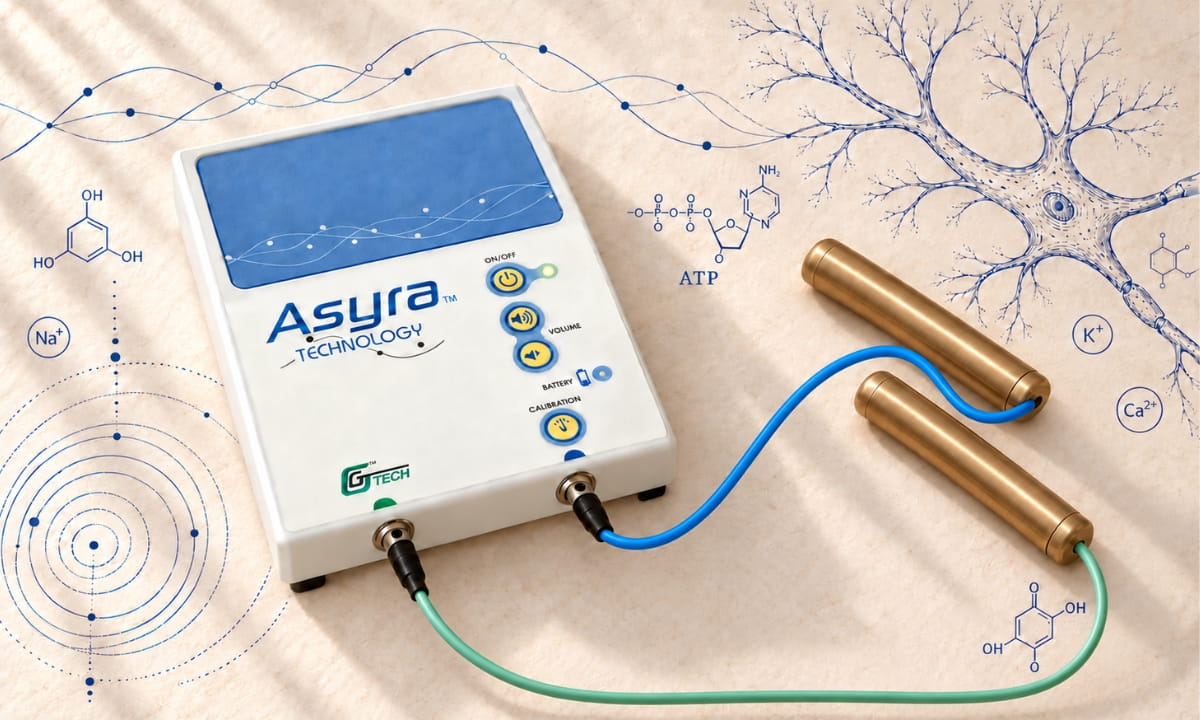
Is Bioresonance Therapy Backed by Science? Where Real Bioenergetics Ends and the Open Questions Begin
Bioenergetics itself is solid science. The open question is whether a device can read and correct those signals. Your cells run on electrical and chemical energy. Mitochondria produce ATP, nerve and heart cells fire electrical signals, and doctors record them every day with EKGs and EEGs. Nobody serious disputes that the body is an energetic system, and that is the foundation bioenergetic medicine builds on.
Bioresonance therapy goes one step further. It proposes that a device can pick up very faint signals from cells and send corrected ones back. That step is still unconfirmed. Memorial Sloan Kettering describes the underlying idea as an unproven theory, and notes that trials found electrodermal testing unreliable for diagnosing allergies, that a children’s eczema trial showed no benefit, and that European guidelines do not recommend it for atopic eczema. Even the authors of the smoking study acknowledge that instruments have not yet directly detected the signals the theory relies on.
Skepticism deserves a fair hearing here, and so does the other side. Complementary approaches often face heavier scrutiny than conventional ones, and some of that criticism is reflexive. But much of the pushback targets exaggerated promises, not the idea that energy matters. A medically reviewed Healthline overview notes that the UK advertising regulator found efficacy claims unsupported, and that the U.S. Federal Trade Commission acted against bioresonance cancer-cure claims. Those are lessons about overpromising, and they are worth learning.
Why this matters: early, small studies are a reason to keep investigating, not to dismiss a field and not to oversell it. A therapy can also help some people through attention, expectation and a calm hour in a quiet room, even when its stated mechanism is not yet proven. That is why I treat bioresonance as a screening input and a conversation starter, and why I never present it as a cure or a diagnosis.
Is Bioresonance Therapy Safe?
In published studies, bioresonance therapy has shown few or no side effects. In the smoking trial, one participant developed a mild skin reaction that cleared on its own.
The bigger risk is indirect: delaying or replacing care that has real evidence behind it. Studies have also tended to exclude people with pacemakers, heart rhythm problems or pregnancy, so anyone in those groups should check with their physician first. Sudden, severe or worrying symptoms need a medical evaluation before anything else.
How Can Bioresonance Fit Into a Functional Medicine Plan?
At most, bioresonance is a conversation starter, not a verdict. The foundation of functional medicine stays the same: sleep, food quality, movement, stress load and targeted lab testing. If you want background on how this field thinks, start with what bioenergetic medicine is and the history and development of bioenergetic theory.
In my practice, Asyra bioenergetic screening is one small input alongside your history, exam and labs. If a report points toward digestion, stress or nutrition, we check those areas with standard tools rather than treating the report as proof. Habits with far stronger evidence, such as regular movement, consistent sleep and stress reduction, are worth building first. Bring your medication and supplement lists to any visit, and look for a practitioner who is upfront about where the evidence is thin.
Key Takeaways
- Bioresonance therapy is unproven. A few small trials show benefits, and others show none.
- The best-controlled positive result is a 190-person smoking pilot, which still needs independent replication.
- Depression and arthritis findings come from small, imperfect studies and should not guide medication decisions.
- Major cancer centers do not recommend bioresonance for cancer or for diagnosing allergies.
- Side effects look rare, but delaying effective care is the real risk.
- Used responsibly, bioenergetic screening is a prompt for better questions, not a diagnosis.
A Question Worth Sitting With
If a therapy cannot yet explain how it works, how much weight should a few promising trials carry? A fair answer holds two ideas at once: curiosity about what patients report, and discipline about what has actually been proven. The next decade of better studies will decide which side of that line bioresonance therapy lands on.
Related Reading
- What Is Bioenergetic Medicine? A Cellular Energy Approach to Healing
- Bioenergetic Medicine in Practice: How to “Ask the Body” What It Needs Before Symptoms Become a Diagnosis
- Unlock Your Body’s Healing Wisdom with Bio-Resonance Technology
Frequently Asked Questions
What is bioresonance therapy?
Bioresonance therapy is a complementary method that uses electrodes and a device to read and adjust electromagnetic signals the body is said to produce. It was developed in Germany in the 1970s from electroacupuncture research. Its underlying theory has not been proven, and its benefits are still being studied.
Does bioresonance therapy really work?
The evidence is mixed. Small trials report benefits for smoking cessation, knee osteoarthritis and mild depression, while other controlled trials found no effect for allergies or childhood eczema. Larger independent studies are needed before anyone can call it effective.
How does bioresonance therapy work, according to practitioners?
Practitioners say unhealthy cells emit altered electromagnetic waves and that a device can detect those waves and return corrected ones to the body. This mechanism has not been confirmed with direct measurements, so it remains a theory rather than established science.
Is bioresonance therapy FDA approved?
The FDA has not cleared bioresonance devices to diagnose or treat disease. Some electrodermal devices carry FDA clearance only to measure galvanic skin response, meaning changes in the skin’s electrical conductance. In a 2023 warning letter about one such device, the FDA stated that promoting it to identify conditions or recommend treatments went beyond that cleared use (FDA, 2023). That is why I describe bioenergetic screening as a conversation tool and never as a diagnosis.
Can bioresonance testing diagnose allergies or other conditions?
No. Clinical trials reviewed by Memorial Sloan Kettering found bioresonance and electrodermal testing unsuccessful at diagnosing allergies. Bioenergetic screening should be used only as a conversation tool alongside your history, exam and lab work, never to diagnose or to start or stop a medication.
How many bioresonance therapy sessions do studies use?
It varies widely. The smoking trial used a single session of about 45 minutes. The depression study used five weekly sessions of 20 minutes, and the knee osteoarthritis trial ran for five to six weeks. There is no proven standard schedule.
What is the difference between bioresonance therapy and bioresonance testing?
Bioresonance testing records your body’s electrical response while a computer introduces signals linked to foods, nutrients or stressors. Bioresonance therapy claims to send signals back to the body. Testing is a screening tool; neither is a diagnosis.
Is bioresonance therapy safe?
Published studies report few or no side effects, though one smoking-trial participant had a mild skin reaction. The main risk is relying on it instead of effective care. People with pacemakers, heart rhythm problems or pregnancy should talk with their physician first.
References
- Pihtili A, Galle M, Cuhadaroglu C, et al. Evidence for the Efficacy of a Bioresonance Method in Smoking Cessation: A Pilot Study. Forschende Komplementärmedizin / Research in Complementary Medicine. 2014;21(4):239-245. https://karger.com/fok/article/21/4/239/356728/Evidence-for-the-Efficacy-of-a-Bioresonance-Method
- Maiko OJ, Gogoleva EF. Outpatient bioresonance treatment of gonarthrosis (in Russian). Terapevticheskii Arkhiv. 2000;72(12):50-53. https://pubmed.ncbi.nlm.nih.gov/11201834/
- Muresan D, Voidazan S, Salcudean A, Bodo CR, Gabos Grecu I. Bioresonance, an alternative therapy for mild and moderate depression. Experimental and Therapeutic Medicine. 2022;23(4):264. https://pmc.ncbi.nlm.nih.gov/articles/PMC8892610/
- Hersh E. What Is Bioresonance and Does It Work? Healthline. Medically reviewed by Boyle K. Updated December 18, 2024. https://www.healthline.com/health/bioresonance
- U.S. Food and Drug Administration. Warning Letter to ZYTO Technologies, Inc. (CMS 652316). June 21, 2023. https://www.fda.gov/inspections-compliance-enforcement-and-criminal-investigations/warning-letters/zyto-technologies-inc-652316-06212023
About the Author
Aleksander Kanevsky, DC, CFMP, is a chiropractor and certified functional medicine practitioner at Atlant Chiropractic in Midtown East, Manhattan, where he combines chiropractic care with functional medicine.
Disclaimer
These statements have not been evaluated by the Food and Drug Administration. This content is for educational purposes only and is not intended to diagnose, treat, cure or prevent any disease. Talk with your physician before making changes to your health care, and never stop or change prescribed medication without medical guidance.
Article by Aleksander Kanevsky, DC, CFMP
 At New York City Chiropractic and Functional Medicine Center, Dr. Aleksander Kanevsky provides Chiropractic Care, Bioenergetic Medicine, Functional Medicine and Nutrition. Dr. Kanevsky demonstrates why this type of integrative care is an essential addition to a health care practice. He helps people to achieve quality of life and highest expression of health.




