
For years, doctors assumed GLP-1 medications protected the heart mainly because patients lost weight. New cardiovascular trial data tells a different story. Most of the heart protection from GLP-1 therapy has little to do with the number on the scale. These medications calm vascular inflammation, help blood vessels relax, and are now approved specifically to lower cardiovascular risk, independent of weight loss alone. Understanding GLP-1 heart health benefits beyond weight loss changes how patients and clinicians should think about this class of medication: not as an appetite drug with a side benefit, but as a systemic cardiovascular tool that also happens to reduce appetite.
What Is “GLP-1 Heart Health” and Why Is Everyone Suddenly Talking About It?
Most of what people have heard about GLP-1 medications centers on weight loss. What gets far less attention is what is happening underneath that headline, inside the blood vessels, the immune system, and possibly even the way cells age.
GLP-1 (glucagon-like peptide-1) is a hormone your gut already produces after you eat. GLP-1 receptor agonist medications mimic that hormone, and they do more than slow digestion and quiet appetite. In 2024, the FDA granted a specific cardiovascular risk reduction indication for a GLP-1 medication in adults with established heart disease and obesity or overweight, based on trial results that held up regardless of how much weight a given patient actually lost.[2] That is a meaningful signal that GLP-1 heart health benefits beyond weight loss are not a marketing angle. They are now part of an FDA-recognized indication.
The One-Third Rule: Why the Scale Isn’t the Whole Story
The trial behind that FDA decision followed more than 17,000 adults with existing cardiovascular disease and overweight or obesity, but no diabetes. The GLP-1 medication studied reduced major cardiovascular events, meaning cardiovascular death, heart attack, or stroke, by 20 percent compared to placebo.[1]
Here is the part that surprised even the researchers. When they ran a mediation analysis to see how much of that 20 percent came from weight loss itself, the answer was underwhelming: body weight change explained only around a fifth to a third of the cardiovascular benefit, depending on the statistical approach used. The rest, the majority of the protective effect, was happening through some other mechanism entirely.
That reframes the whole story. The pounds lost were real and meaningful, but they were not what was primarily protecting these patients’ hearts.
Mapping the Systemic Effect: Why One Receptor Touches So Much
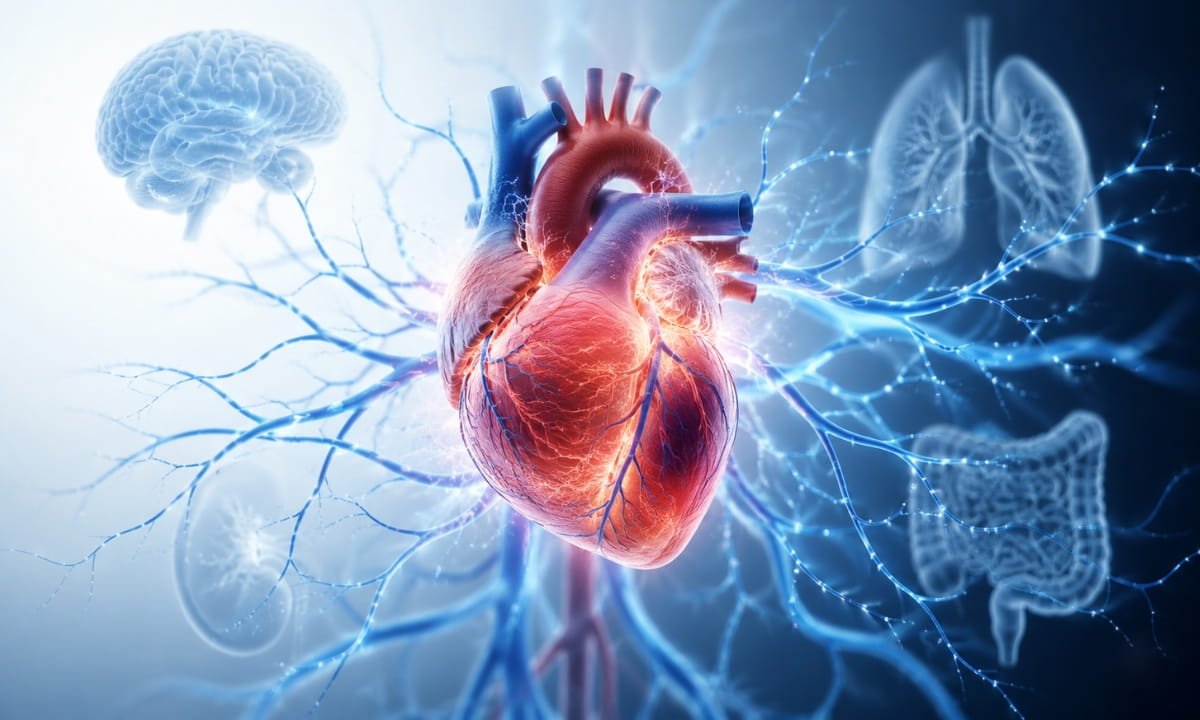
Part of why this makes biological sense is that GLP-1 receptors are not confined to the gut or pancreas. They show up throughout the body: the brain, kidneys, immune cells, and the heart and blood vessels themselves.
That distribution means a GLP-1 medication does not act like a scalpel aimed at one target. It behaves more like a dimmer switch across several interconnected systems at once, insulin release, satiety signaling in the brain, sodium handling in the kidneys, inflammatory activity in immune cells, and vascular tone in the heart and arteries. Reviews of the endothelium-level mechanisms describe direct effects on blood vessel lining cells, immune cells that patrol the vessel wall, and smooth muscle, independent of glucose or weight change.[5]
Quenching the Vascular Fire: The Inflammation Connection
Chronic low-grade inflammation in the blood vessel walls is one of the quiet drivers behind heart attacks and strokes. Clinicians track this using high-sensitivity C-reactive protein, or hs-CRP.
In the same landmark trial, the GLP-1 medication reduced hs-CRP by nearly 38 percent over two years compared to placebo, and that reduction occurred regardless of a patient’s starting weight or whether they were already on a statin. Separate mechanistic research on GLP-1 receptor activation describes measurable anti-inflammatory effects on the vascular system itself, not just on metabolic labs.[6] This is one of the clearer, more measurable pieces of the GLP-1 heart health benefits beyond weight loss story: less inflammatory fuel circulating through the vessels, independent of the scale.
“GLP-1 receptor agonists represent more than diabetic and weight loss drugs. Their cardiovascular protective properties operate through mechanisms distinct from glycemic or weight effects.”
That framing, echoed across recent cardiology literature reviewing this drug class, captures the shift underway. Something beyond appetite suppression is doing real work here.
Beyond One Diagnosis: Heart Failure and Vascular Flexibility
The cardiovascular story does not stop at heart attack and stroke prevention. Separate large trials have shown GLP-1 based therapies improving symptoms and physical function in patients with heart failure with preserved ejection fraction and obesity, a notoriously difficult-to-treat form of heart failure.[3,4] Improved vascular flexibility, thought to be driven by better nitric oxide signaling in the vessel lining, is one proposed mechanism behind why stiff, inflamed arteries begin to relax and function more normally on these medications, often before major weight loss has occurred.
On Microdosing: What the Evidence Actually Supports
Lower-dose, or “microdose,” protocols have become a popular talking point in longevity and wellness circles, often framed as delivering superior results with fewer side effects. It is worth being precise here rather than promotional: the cardiovascular outcomes described above, the 20 percent MACE reduction, the hs-CRP drop, the heart failure symptom improvement, all come from trials using standard therapeutic dosing, not microdosing. There is currently no comparable outcomes data showing that microdosing outperforms standard dosing for cardiovascular protection.
What microdosing may offer, based on clinical experience rather than outcomes trials, is a gentler entry point for patients who are highly sensitive to gastrointestinal side effects, or an option for those pursuing metabolic optimization rather than significant weight loss. Whether a lower or standard dose is appropriate is an individualized decision that belongs in a proper medical evaluation, not a default assumption that less is automatically better.
The Longevity Question: What the Cellular Aging Data Actually Shows
This is the part of the GLP-1 story that generates the most excitement, and it deserves a careful look rather than hype.
A recent study analyzed blood samples from a placebo-controlled trial of adults living with HIV who also had a metabolic fat-distribution condition. Using DNA methylation-based “epigenetic clocks,” researchers found that GLP-1 therapy was associated with slower biological aging markers, including a measurable slowing of mortality-risk-associated clocks and lengthened telomere-associated markers in roughly half of participants.[7]
Two things are worth being direct about. First, this is genuinely exciting early evidence that GLP-1 medications may influence aging biology, not just metabolic markers. Second, this specific study population was adults with HIV-associated lipohypertrophy, not the general public, so it remains unclear how directly these findings translate to a broader, metabolically healthy population. Treat this as a promising signal worth watching, not a settled conclusion.
Beyond the Prescription: Where Lifestyle Still Does the Heavy Lifting
None of this makes lifestyle work optional. If anything, the data reinforces how much of cardiovascular risk is inflammatory and metabolic in nature. The American Heart Association’s foundational guidance, including its Life’s Essential 8 framework, still applies directly here: an anti-inflammatory, nutrient-dense way of eating, regular physical activity, quality sleep, and active stress management move the same inflammatory and metabolic dials that GLP-1 therapy influences pharmacologically.[8,9] Targeted nutritional support, including omega-3s, magnesium, and antioxidant-supporting nutrients, can complement this foundation.
This is also where a functional medicine evaluation adds real value beyond a quick prescription. Understanding a patient’s actual inflammatory load, insulin sensitivity, and metabolic history through proper lab work provides the context needed to know whether, and how, a GLP-1 based approach fits into a broader plan. We have written previously about how GLP-1 therapy interacts with fat-stored toxins during weight loss and about the real difference between research-grade and prescription-grade peptides, both worth reading before starting any protocol.
A Note on Quality, Evaluation, and Where Atlant Chiropractic Fits In
At Atlant Chiropractic, our role in the GLP-1 and peptide conversation is education, evaluation, and appropriate referral. As a functional medicine practitioner, Dr. Kanevsky helps patients understand their metabolic and inflammatory picture through comprehensive lab review before any medication decision is made, and connects patients with licensed prescribing physicians when a GLP-1 based approach is clinically appropriate.
Quality matters as much as the decision to start. For patients exploring this path, EllieMD is a physician-directed telehealth partner whose compounded medications are sourced through 503A and 503B compounding pharmacies, meaning they are prepared under FDA-regulated pharmacy standards rather than sold as unregulated research material. Their process begins with a full health assessment and medical review, including a conversation about dosing strategy, standard or lower-dose, based on your individual goals and biology, before anything is prescribed.
Key Takeaways
- A GLP-1 medication has received a specific FDA indication for reducing cardiovascular risk in adults with obesity or overweight and existing heart disease.
- In the pivotal trial, that medication reduced major cardiovascular events by 20 percent, and weight loss itself explained only about a fifth to a third of that benefit.
- The same medication reduced hs-CRP, a marker of vascular inflammation, by nearly 38 percent over two years, regardless of baseline weight or statin use.
- GLP-1 receptors are present throughout the brain, kidneys, immune system, and cardiovascular system, which explains the medication’s broad, systemic effects.
- Microdosing may offer a gentler entry point for some patients, but current cardiovascular outcomes data comes from standard dosing, not microdosing, and should be discussed individually with a prescriber.
- Early research found associations between GLP-1 therapy and slower biological aging markers, though this evidence currently comes from a specific patient population and needs broader confirmation.
- Lifestyle strategies, including anti-inflammatory nutrition, movement, sleep, and stress management, target the same inflammatory pathways and remain foundational regardless of medication use.
Closing Reflection
For years, weight was treated as the whole story with GLP-1 medications. The emerging data suggests it may only be a subplot. If a medication can meaningfully protect the heart and calm inflammation independent of what the scale says, it raises a genuinely interesting question for how we define metabolic health going forward: is the number on the scale really the outcome that matters most, or has it simply been the easiest one to measure?
Frequently Asked Questions
Do GLP-1 medications help the heart even without weight loss?
Yes, based on current trial data. In the pivotal cardiovascular outcomes trial, most of the cardiovascular benefit was not explained by weight loss alone, pointing to independent effects on inflammation and vascular function.
How much does GLP-1 therapy lower cardiovascular risk?
In the trial that led to FDA approval of a cardiovascular risk reduction indication, a GLP-1 medication reduced major adverse cardiovascular events (cardiovascular death, heart attack, or stroke) by 20 percent compared to placebo in adults with existing heart disease and overweight or obesity.
Does GLP-1 therapy reduce inflammation?
Yes. The medication studied reduced hs-CRP, a key marker of vascular inflammation, by nearly 38 percent over two years, independent of baseline weight.
Is microdosing better than standard dosing for heart health?
Not based on current evidence. The cardiovascular outcomes data available today comes from standard therapeutic dosing. Microdosing may suit certain patients for tolerability or specific goals, but that decision should be individualized with a prescriber rather than assumed to be superior.
Can GLP-1 therapy slow biological aging?
Early research found associations between GLP-1 therapy and slower markers of biological aging, including telomere-related measures. This research is still emerging and was conducted in a specific patient population, so broader confirmation is needed.
Is GLP-1 therapy a replacement for diet and exercise?
No. Lifestyle factors that reduce inflammation and improve insulin sensitivity, including nutrition, movement, sleep, and stress management, remain foundational and work alongside, not instead of, any medication approach.
Related Reading
- PCOS Is Now PMOS: What the Name Change Means and How Peptide Therapy Is Reshaping Treatment
- Your “Healthy” Diet May Be Fueling Insulin Resistance
- Your Body Is Inflamed and Your Metabolism Is Suffering, But the Fix Starts with the Basics
References
- Lincoff AM, Brown-Frandsen K, Colhoun HM, et al., for the SELECT Trial Investigators. Semaglutide and Cardiovascular Outcomes in Obesity Without Diabetes. New England Journal of Medicine. 2023;389(24):2221-2232. https://www.nejm.org/doi/full/10.1056/NEJMoa2307563
- U.S. Food and Drug Administration. FDA Approves First Treatment to Reduce Risk of Serious Heart Problems Specifically in Adults With Obesity or Overweight. 2024. https://www.fda.gov/news-events/press-announcements/fda-approves-first-treatment-reduce-risk-serious-heart-problems-specifically-adults-obesity-or
- Kosiborod MN, Abildstrøm SZ, Borlaug BA, et al. Semaglutide in Patients With Heart Failure With Preserved Ejection Fraction and Obesity. New England Journal of Medicine. 2023. https://www.nejm.org/doi/full/10.1056/NEJMoa2306963
- Packer M, Zile MR, Kramer CM, et al. Tirzepatide for Heart Failure With Preserved Ejection Fraction and Obesity. New England Journal of Medicine. 2024. https://www.nejm.org/doi/full/10.1056/NEJMoa2410027
- Park B, Kwan HY, et al. GLP-1 Receptor Agonists and Atherosclerosis Protection: The Vascular Endothelium Takes Center Stage. American Journal of Physiology-Heart and Circulatory Physiology. 2024. https://pubmed.ncbi.nlm.nih.gov/38426865/
- Skrobucha A, et al. Anti-Inflammatory Effects of GLP-1 Receptor Activation in the Cardiovascular System. 2024. https://pubmed.ncbi.nlm.nih.gov/39741663/
- Corley MJ, et al. Semaglutide Slows Epigenetic Aging in People With HIV-Associated Lipohypertrophy: Evidence From a Randomized Controlled Trial. Nature Communications. 2025. https://pmc.ncbi.nlm.nih.gov/articles/PMC12338914/
- American Heart Association. Diet and Lifestyle Recommendations. Updated 2026. https://www.heart.org/en/healthy-living/healthy-eating/eat-smart/nutrition-basics/aha-diet-and-lifestyle-recommendations
- American Heart Association. Life’s Essential 8. Accessed 2026. https://www.heart.org/en/healthy-living/healthy-lifestyle/lifes-essential-8
- Additional background context on the mechanistic and cardiology perspective referenced in this article’s development: video interview discussion of GLP-1 cardiovascular mechanisms
FDA Disclaimer: The statements made in this article have not been evaluated by the Food and Drug Administration. The information provided is for educational purposes only and is not intended to diagnose, treat, cure, or prevent any disease or medical condition. GLP-1 medications discussed in this article require evaluation, prescription, and supervision by a licensed physician. Always consult a qualified healthcare provider before beginning any new medication, peptide, or supplement protocol. Dr. Aleksander Kanevsky, DC, CFMP is a Doctor of Chiropractic and Certified Functional Medicine Practitioner. He does not prescribe medications or peptides. His role is patient education, comprehensive functional medicine evaluation, and clinical referral to licensed prescribing physicians where appropriate.
Article by Aleksander Kanevsky, DC, CFMP
 At New York City Chiropractic and Functional Medicine Center, Dr. Aleksander Kanevsky provides Chiropractic Care, Bioenergetic Medicine, Functional Medicine and Nutrition. Dr. Kanevsky demonstrates why this type of integrative care is an essential addition to a health care practice. He helps people to achieve quality of life and highest expression of health.




